Retention & Anti-Disengagement Under vibration and tension in vehicles or equipment, they prevent connectors from loosening and terminals from disconnecting, ensuring continuous circuit conduction and avoiding power outages and signal loss.
Position Limiting & Anti-Shifting They restrain the position of wire harnesses and connectors to prevent shifting and friction against enclosures or pipelines, reducing abrasion and abnormal noise.
Accidental Unplugging Prevention The dual-locking structure stops unintended disconnection caused by personnel contact or equipment scraping, improving operational safety.
Harness Organization They bundle scattered wires for neat routing, facilitating assembly and maintenance while preventing wire tangling.
Protection & Wear Reduction They mitigate repeated bending and friction at connector joints and wire roots, extending service life.
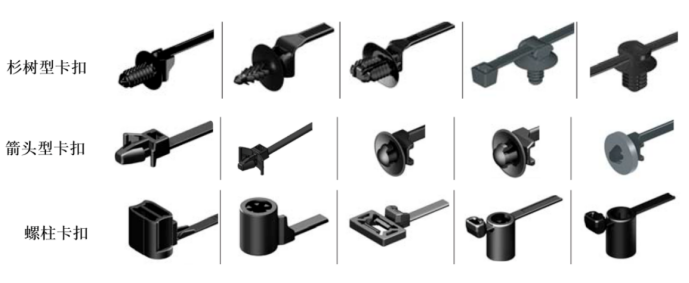
· Clip base: Measure the dimensions, shape (round/square/oval), spacing of mounting holes and groove profiles on connectors, sheet metal or plastic parts. The clip feet must fit the holes precisely for firm installation without loosening or detachment.
· Fitting position: Confirm the binding points (connector body, wire root or bundled harness) and check available space to avoid installation interference.
Measure the maximum outer diameter of single wires or bundled harnesses to select cable ties with suitable bundling circumference. The tie circumference shall be slightly larger than the harness perimeter. A small clearance is required; do not over-tighten in vibrating environments to prevent insulation damage.
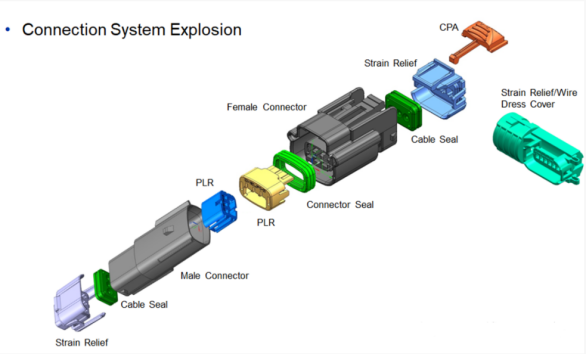
1. Determine clip model, tie length and width based on mounting hole size and harness outer diameter.
2. Select material according to service conditions (indoor/outdoor, oil contamination, high/low temperature).
3. Choose self-locking or releasable ties based on disassembly and maintenance requirements.
4. Confirm head style, environmental compliance and flame retardant properties by checking space constraints and safety regulations.
Prev:What are Automotive Connector Terminals?
Next:How to choose suitable harness hanging fixtures and harness forks for harness engineers?