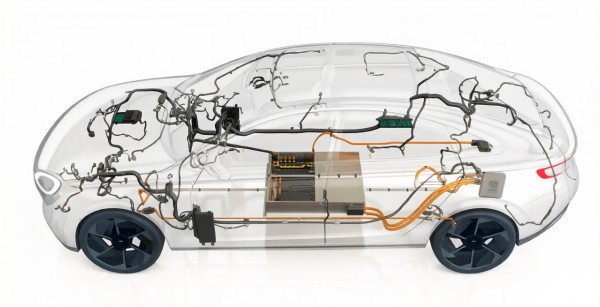
The car wiring harness is equivalent to the "nervous system" of the entire vehicle, including all lights, wipers, air conditioning, instruments ADAS、 Powertrain control and onboard networks (CAN/LIN/Ethernet) all rely on wiring harnesses to transmit signals and power.
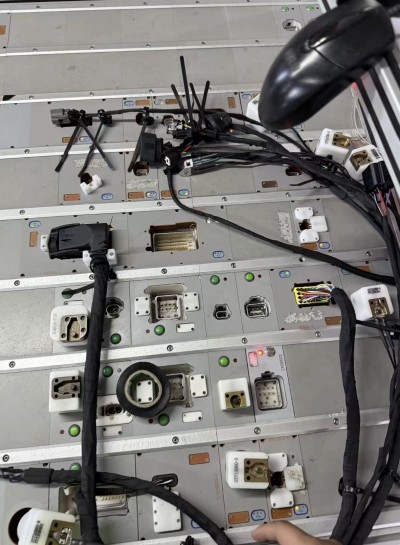
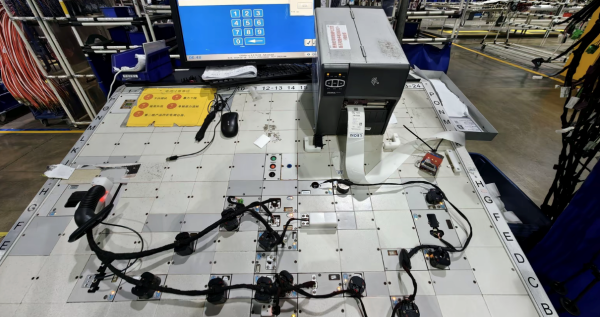
The core purpose of continuity testing is to confirm that each wire is correctly connected at both ends, without any open circuits or misconnections.
Practical significance: As long as one wire is not connected or misconnected, it may lead to the complete failure of a certain function, or even abnormal linkage of multiple systems. For example, if the airbag wiring harness is disconnected, the airbag cannot be deployed during a collision; The brake light circuit is open, making it difficult for the rear vehicle to determine the intention of deceleration, which can easily lead to rear end collisions.
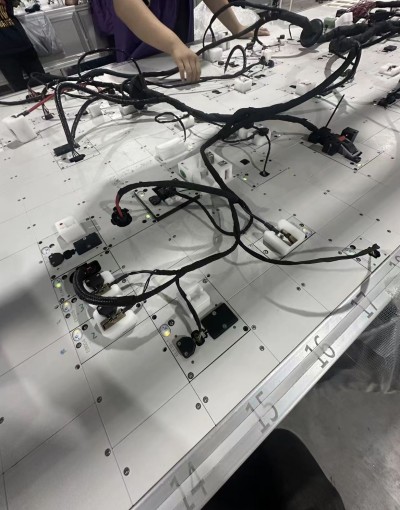
With the development of electrification and intelligence in automobiles, wiring harnesses are becoming increasingly complex
High voltage wiring harness (power battery, motor, charging and discharging system)
High speed data bus (vehicle Ethernet, LVDS)
Communication network between a large number of ECUs
In this context, the continuity test is also being upgraded:
Expanding from simple "no connection" to circuit resistance monitoring (identifying virtual connections and poor contacts)
Combined with insulation testing and withstand voltage testing, form a complete electrical safety testing package
For high-voltage wiring harnesses, in conjunction with interlock circuit (HVIL) testing, ensure that the high-voltage system can be promptly powered off for protection in the event of abnormal disconnection
Prev:The practical application of wireless card nail signal transmitter in wire harness operation
Next:Application of automatic cable tie cutters on staple tooling in wiring harness factories